The short answer
Don’t decide too far in advance. Both Minneriya and Kaudulla are excellent, and the elephants move between them depending on water and grazing. Safari drivers share news every day about where the herds have been, so the best choice is usually made the day before, or on the morning of your safari.
As a rough guide, Minneriya is often the better choice through the middle of the dry season. Kaudulla often comes into its own later in the year, when the herds shift north-east. But it varies from year to year, so ask us for the latest.
What is “The Gathering”?
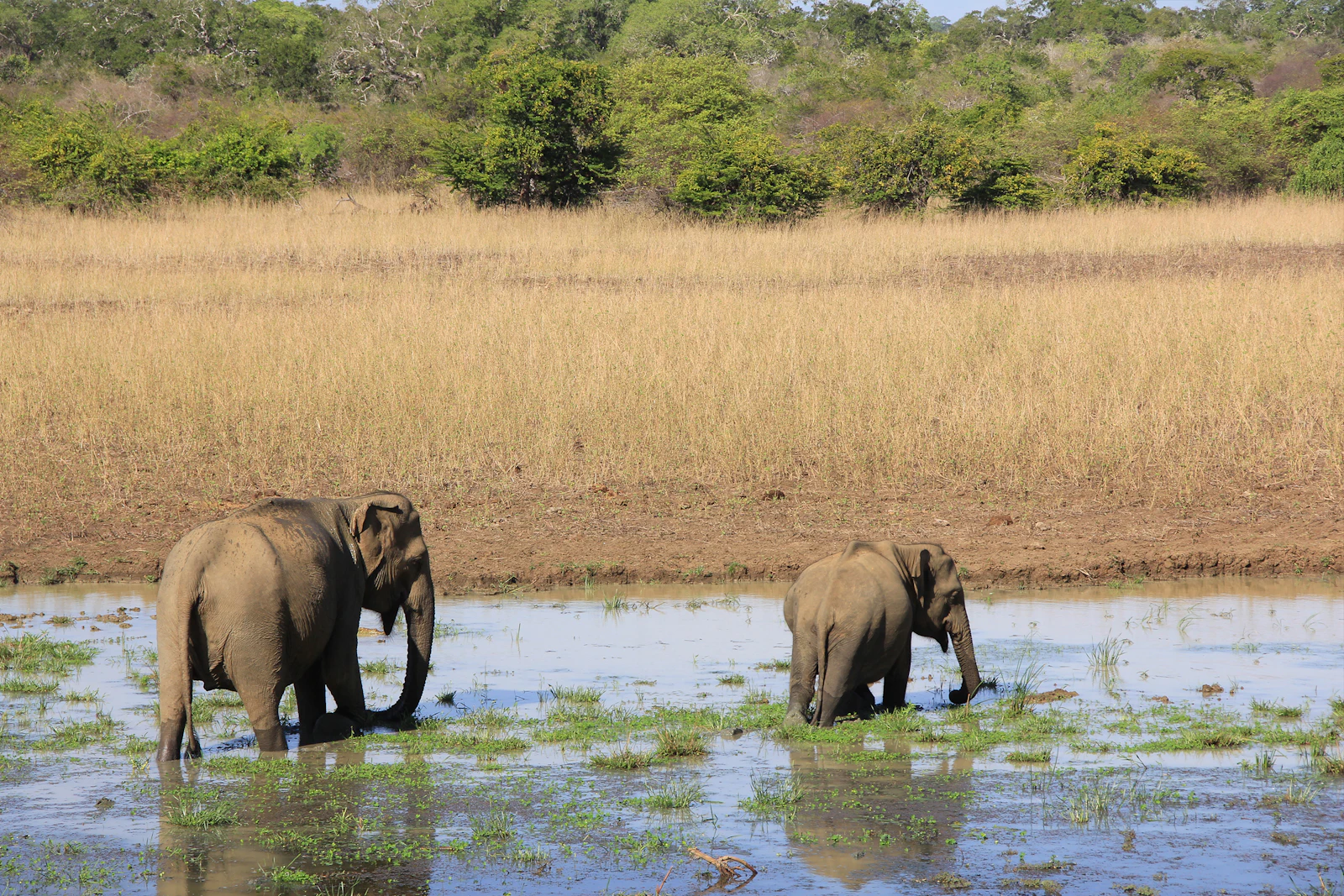
Both parks are built around ancient reservoirs, known in Sri Lanka as tanks. Minneriya’s tank is traditionally credited to King Mahasen in the 3rd century CE. In the dry season, as smaller water sources around the region shrink, the water in the tanks recedes. That leaves wide, grassy shores, and elephants come from the surrounding forests to graze and drink there.
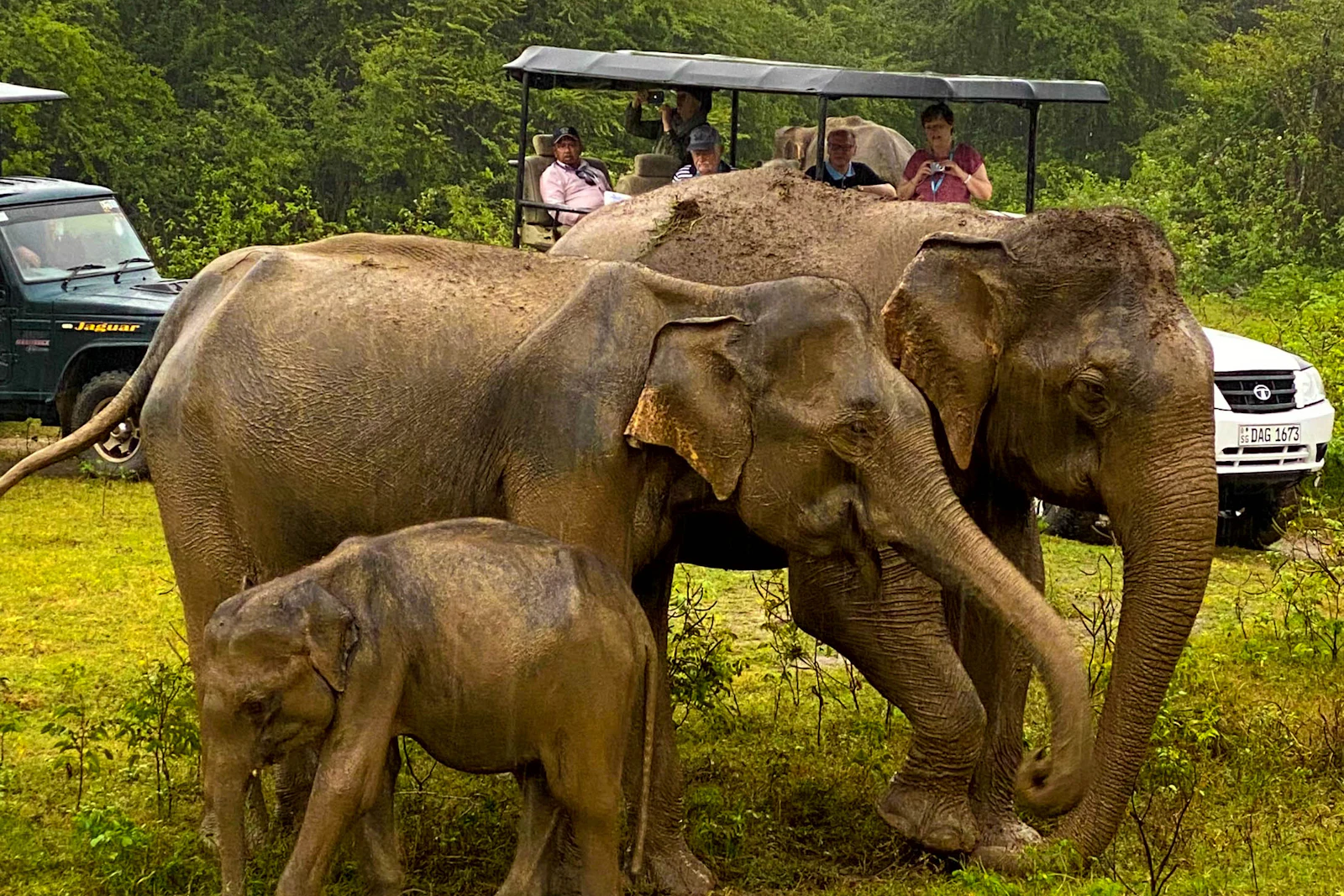
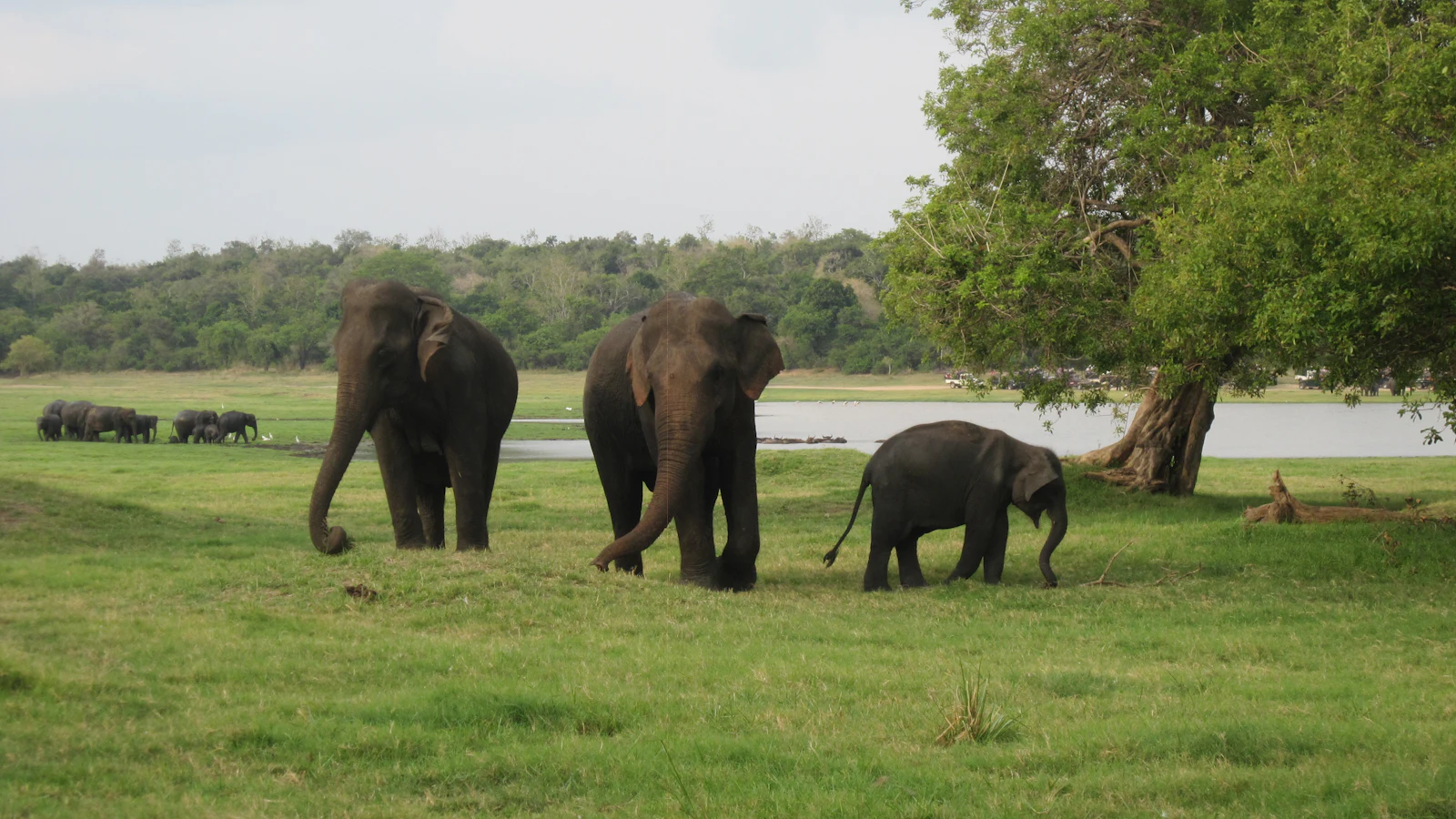
At its peak, this seasonal concentration is called the Gathering. It’s often described as one of the largest congregations of Asian elephants anywhere. Herds of mothers, calves and young bulls spread across the grassland, often in the late afternoon. The peak at Minneriya usually falls somewhere around July to September or October, but numbers and timing depend on the year’s rainfall.
Minneriya National Park
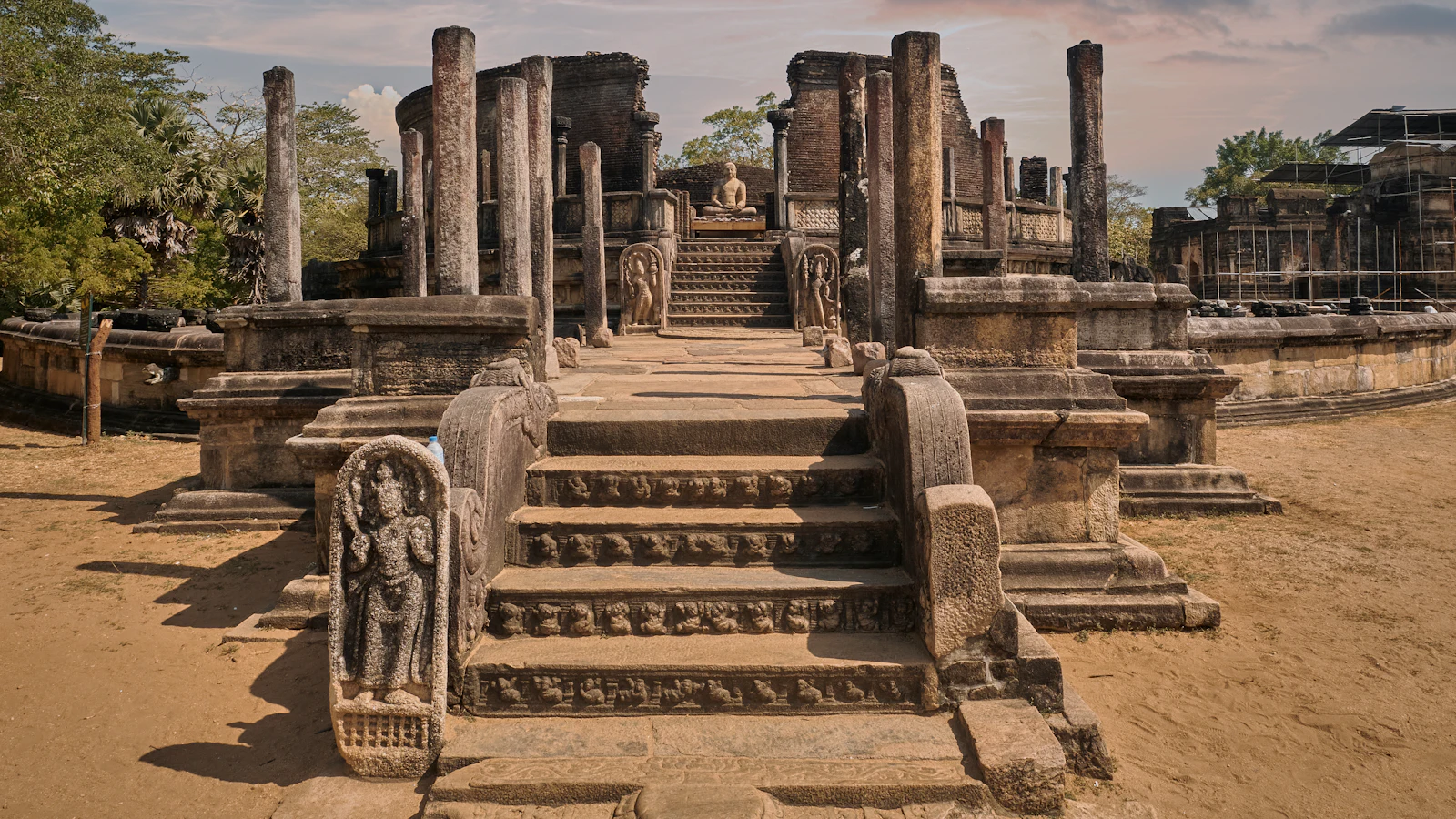
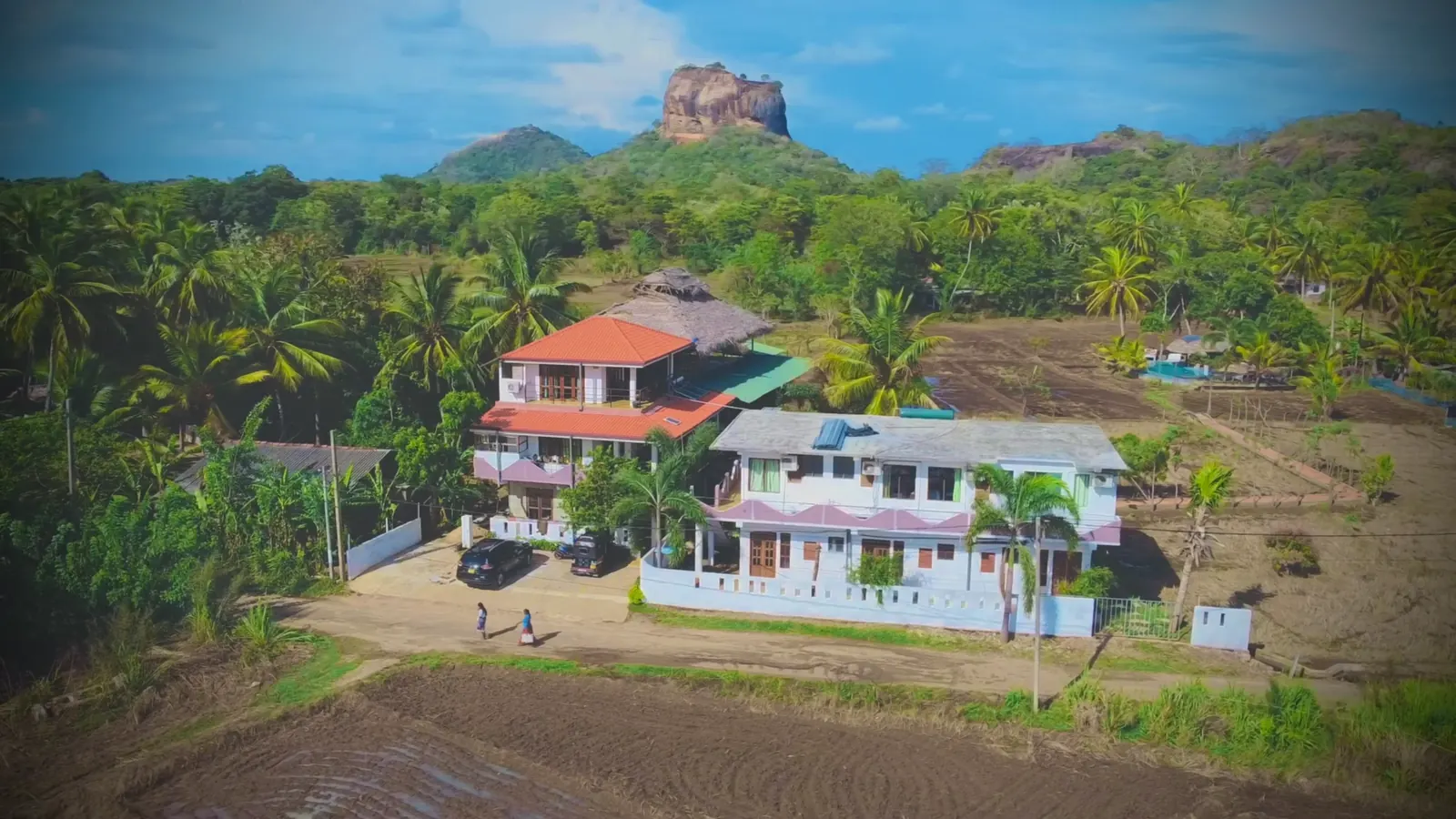
Minneriya is the better-known of the two and, in season, the busier. The open grassland around the tank makes for wide views of large herds, and the birdlife is rich too, with painted storks, pelicans, cormorants and eagles all common sights. It lies about 15 km from the villa in a straight line, on the road towards Polonnaruwa. That makes it easy to pair a morning at the ancient city with an afternoon safari.
Kaudulla National Park
Kaudulla is a little further, about 25 km from the villa in a straight line, and often a little quieter. It is linked to Minneriya by an elephant corridor through the forest, and herds move between the two. When the elephants are at Kaudulla, it can offer just as many sightings with fewer jeeps around. Some drivers may also suggest Hurulu Eco Park, another option in the area depending on the season.
Side by side
| Minneriya | Kaudulla | |
|---|---|---|
| Distance from the villa | About 15 km (straight line) | About 25 km (straight line) |
| Often best | Mid dry season, roughly July–September | Often later in the dry season |
| Crowds | Busier in peak season | Often quieter |
| Pairs well with | Polonnaruwa | A relaxed half day |
| Also look for | Painted storks, pelicans, eagles | Waterbirds around the tank |
How a safari works
Safaris are run in open-sided jeeps with a driver who knows the park. Most guests choose an afternoon safari, which usually lasts around three hours, because elephants tend to come out onto the grassland as the heat eases. Morning safaris are possible too. Park entry fees are charged per person and are usually paid separately from the jeep hire. Prices, opening hours and rules change. Check locally or ask our front desk before you go.
We can help arrange a jeep and pick-up from the villa.
Morning or afternoon?
Afternoon is the classic choice. As the day cools, herds tend to move out of the forest onto the open grassland, and the low light is lovely for photographs. Morning safaris are usually quieter, with fewer jeeps, and the birdlife is especially active. If you are visiting Polonnaruwa, an afternoon safari fits neatly on the drive back to Sigiriya.
Outside the main Gathering season you can still see elephants, but sightings are less predictable and the herds are smaller. Your driver’s local knowledge matters most then, so ask us to help you choose a reliable one.
More than elephants
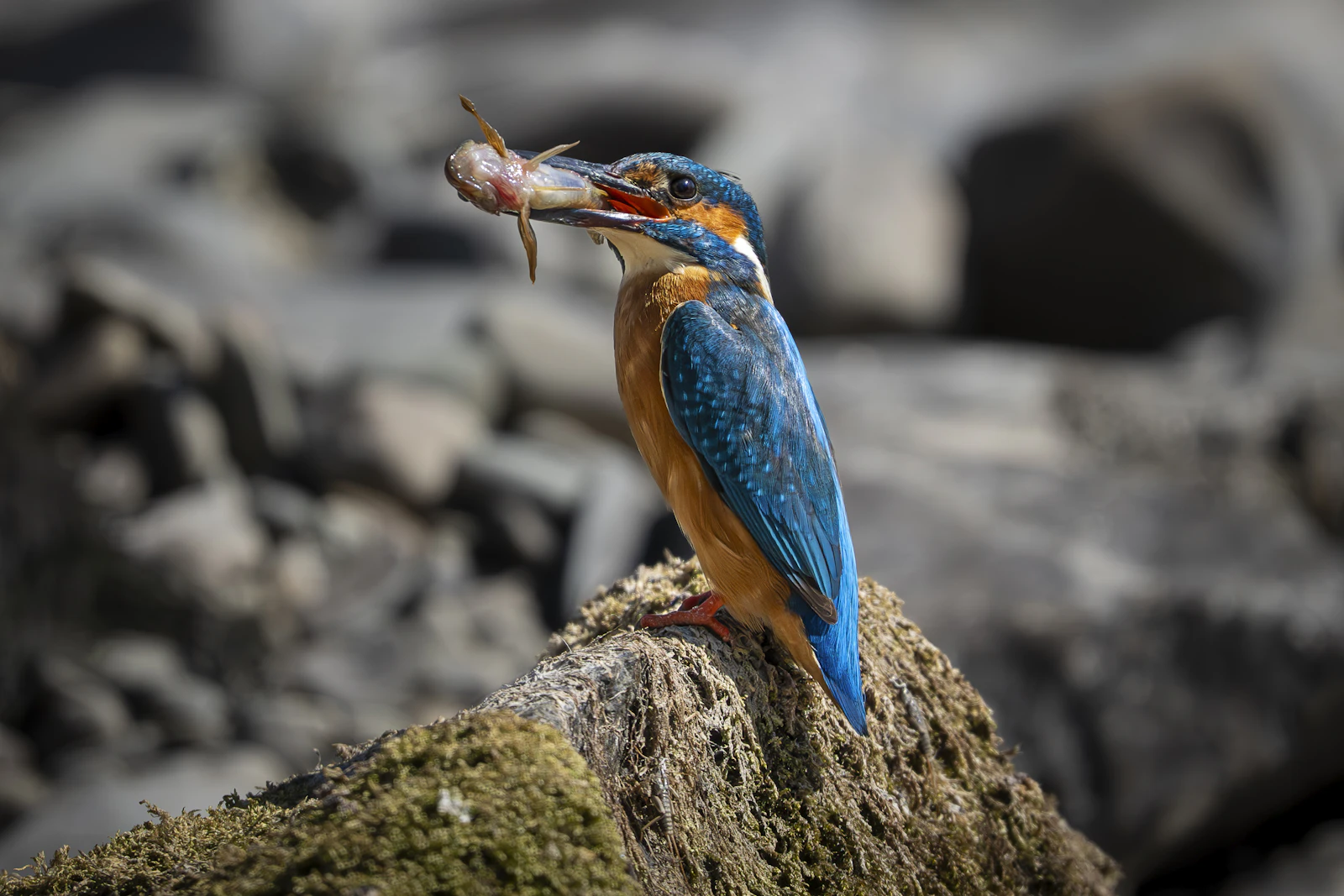
Elephants are the headline, but keep your eyes open for the rest. Toque macaques and grey langurs are common at the forest edge. Spotted deer and sambar graze near the water, and water buffalo wallow in the shallows. Crocodiles bask on the banks of the tank. Leopards and sloth bears live in the region too, though sightings are rare. For birdwatchers, the reservoirs attract storks, herons, egrets and kingfishers, and fish eagles patrol overhead.
Watching elephants responsibly
A good safari leaves the animals undisturbed. Choose a driver who keeps a respectful distance and switches off the engine near the herd. Don’t ask them to get closer than the animals are comfortable with. Never feed wildlife, keep your voice low, and stay in the vehicle. If an elephant flaps its ears, shakes its head or turns towards the jeep, it’s time to give it space.
What to bring
- Binoculars and a camera with a zoom lens
- A hat, sunglasses and sunscreen, as jeeps are open to the sun
- Water and a light layer for the drive back as the light fades
- Something to keep the dust off your camera and phone
- Cash for park fees, if your package doesn’t include them
Last checked: October 2026. Seasons, prices and timetables change, so check the details before you travel. Staying with us? Our front desk is always happy to help you plan.