The short answer
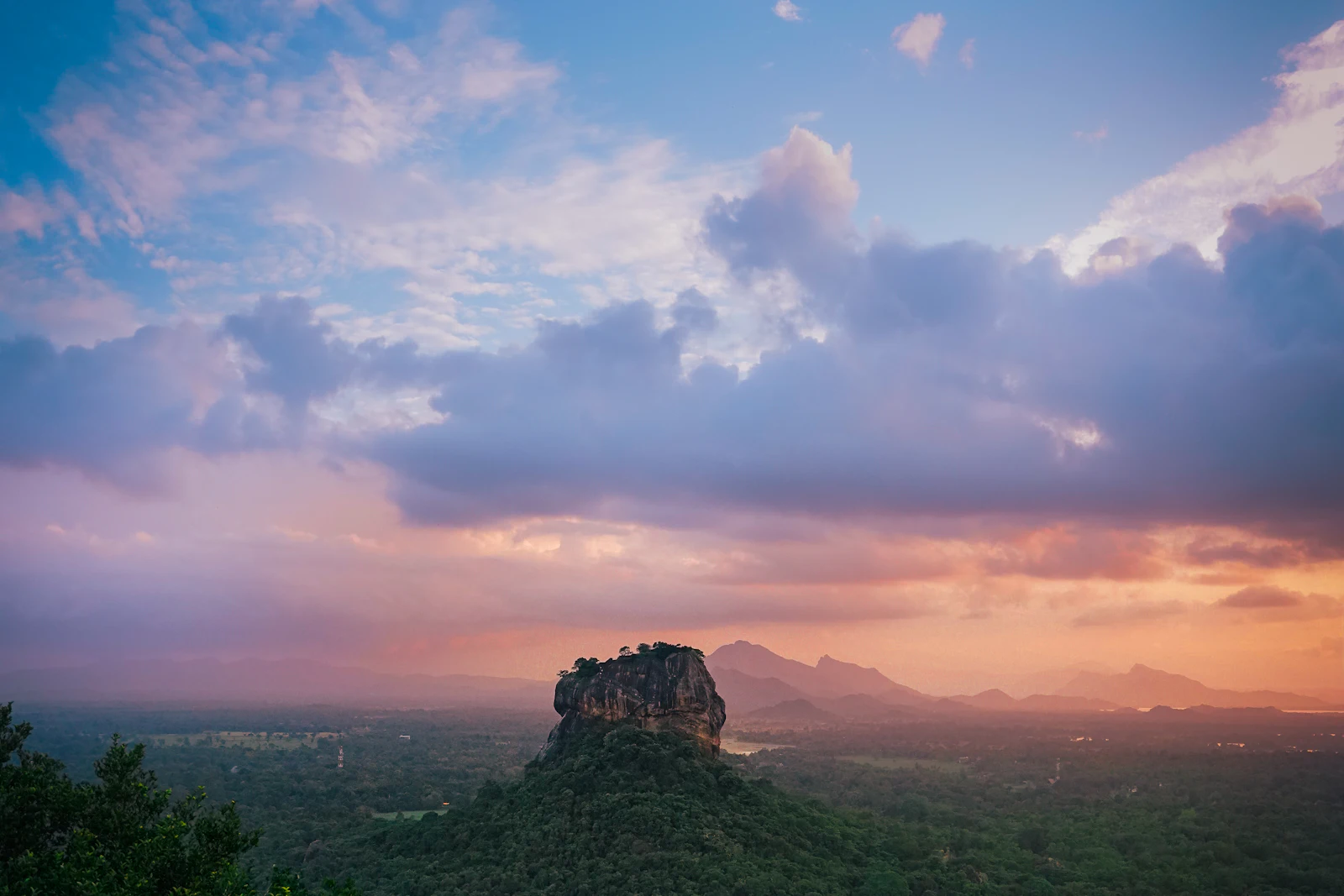
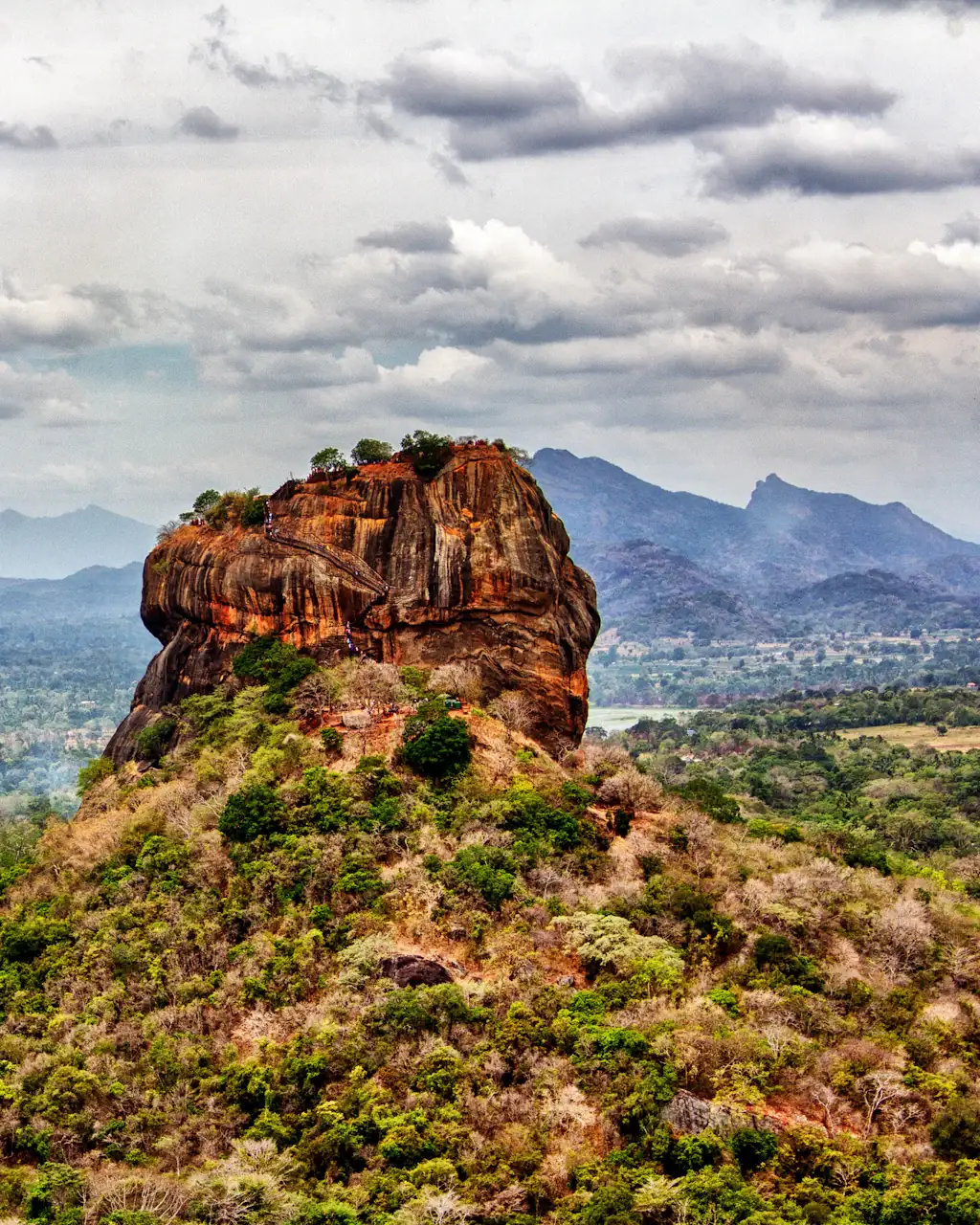
If you love history, climb Sigiriya Rock. It is the fortress itself, with frescoes, the Mirror Wall, the giant lion’s paws and the palace ruins on the summit. If you want the famous view of Sigiriya, climb Pidurangala. It’s the neighbouring rock, with an old monastery at its base and a wide, open summit that looks straight across to Lion Rock.
If you have a full day, do both. They are close enough to combine comfortably, and each makes more sense once you’ve seen the other.
Climbing Sigiriya Rock
Sigiriya is a UNESCO World Heritage Site, inscribed in 1982. It is best known as the 5th-century citadel of King Kashyapa, who ruled from about 477 to 495 CE and built his palace on the summit. The climb is a walk through that story.
- The gardens. You enter through symmetrical water gardens, then boulder gardens, some of the oldest landscaped gardens in Asia.
- The frescoes. A spiral staircase leads to a sheltered gallery of painted women, their colours still bright after some fifteen centuries.
- The Mirror Wall. Once polished to a shine, its surface carries verses scratched by visitors over many centuries.
- The Lion Terrace. A pair of huge carved paws is all that remains of the lion gateway that gave the rock its name.
- The summit. The foundations of the palace, cisterns and terraces, with views over forest, reservoirs and paddy fields in every direction.
Expect around 1,200 steps, a mix of stone stairways and metal staircases bolted to the rock face. Most visitors take two to three hours for the round trip, including time to look around. The upper staircases are exposed, so they can feel airy if you are nervous of heights, but they have railings throughout.
Tickets for foreign visitors are expensive by Sri Lankan standards and include the site museum near the entrance. Prices, opening hours and rules change. Check locally or ask our front desk before you go. Occasionally parts of the climb close for a short time because of hornets. If that happens, follow the staff’s instructions.
Climbing Pidurangala
Pidurangala is a working Buddhist temple as well as a viewpoint. Its history is linked to Sigiriya’s: tradition holds that monks were moved here when Kashyapa built his fortress. You buy your ticket at the temple at the foot of the rock, and because this is a place of worship you’ll need to cover your shoulders and knees. A sarong or light scarf in your bag solves this.
The path climbs steeply through forest on rough stone steps. Partway up you pass a large brick reclining Buddha. The last section is a scramble over and between boulders, where you’ll use your hands. It isn’t technical climbing, but it does need care and sensible shoes, especially after rain.
Most people reach the top in 30 to 45 minutes. The reward is a broad, flat summit with a clear view of Sigiriya Rock rising out of the forest, the shot you have probably seen in every photo of the area.
Side by side
| Sigiriya Rock | Pidurangala | |
|---|---|---|
| Best for | History, frescoes and the palace ruins | The view of Sigiriya, sunrise and sunset |
| Climb | About 1,200 steps, stairways and metal staircases | Steep steps, then a short boulder scramble |
| Time needed | 2–3 hours | 1.5–2 hours |
| Crowds | Busy from mid-morning | Busiest at sunrise and sunset |
| Ticket | Higher foreign-visitor fee | Lower fee, paid at the temple |
| Dress | Comfortable clothing | Shoulders and knees covered |
Doing both in one day
The simplest plan is to climb Sigiriya early, when the gates open and the air is cooler, then return to rest through the heat of the day. Climb Pidurangala in the late afternoon for the sunset light on Lion Rock, and come back down before dark.
Photographers often reverse this. They climb Pidurangala in the dark for sunrise, have breakfast, then tackle Sigiriya mid-morning. It’s a long day, and Sigiriya is hotter and busier by then, but the sunrise from Pidurangala is spectacular on a clear morning. Our sunrise hike page has more on timing an early start.
Practical tips
- Go early. The heat builds quickly from mid-morning, and so do the crowds at Sigiriya.
- Carry water, a hat and sunscreen. Shade is limited on both summits.
- Wear shoes with grip. Sandals are fine on Sigiriya’s staircases but less so on Pidurangala’s boulders.
- Bring a torch if you’ll be on Pidurangala before sunrise or near sunset.
- Bring cash and a card. Check ahead which payment methods each ticket office accepts.
- Respect the temple. At Pidurangala, cover up and remove shoes and hats where signs ask you to.
Which suits you?
- Travelling with young children? Sigiriya’s stairways are long but well railed, and there are places to rest on the way. Pidurangala’s final scramble needs a helping hand for small climbers.
- Nervous of heights? The exposed spiral staircase and upper steps on Sigiriya are the parts people find hardest. Pidurangala feels more enclosed until the very top.
- Limited mobility? Neither climb is step-free. The water gardens, the boulder gardens and the museum at Sigiriya can still be enjoyed without going up the rock.
- Short on time? Pidurangala is quicker. But if you’ll only ever visit once, most people feel Sigiriya itself is the one not to miss.
Getting there from Nelu Villa
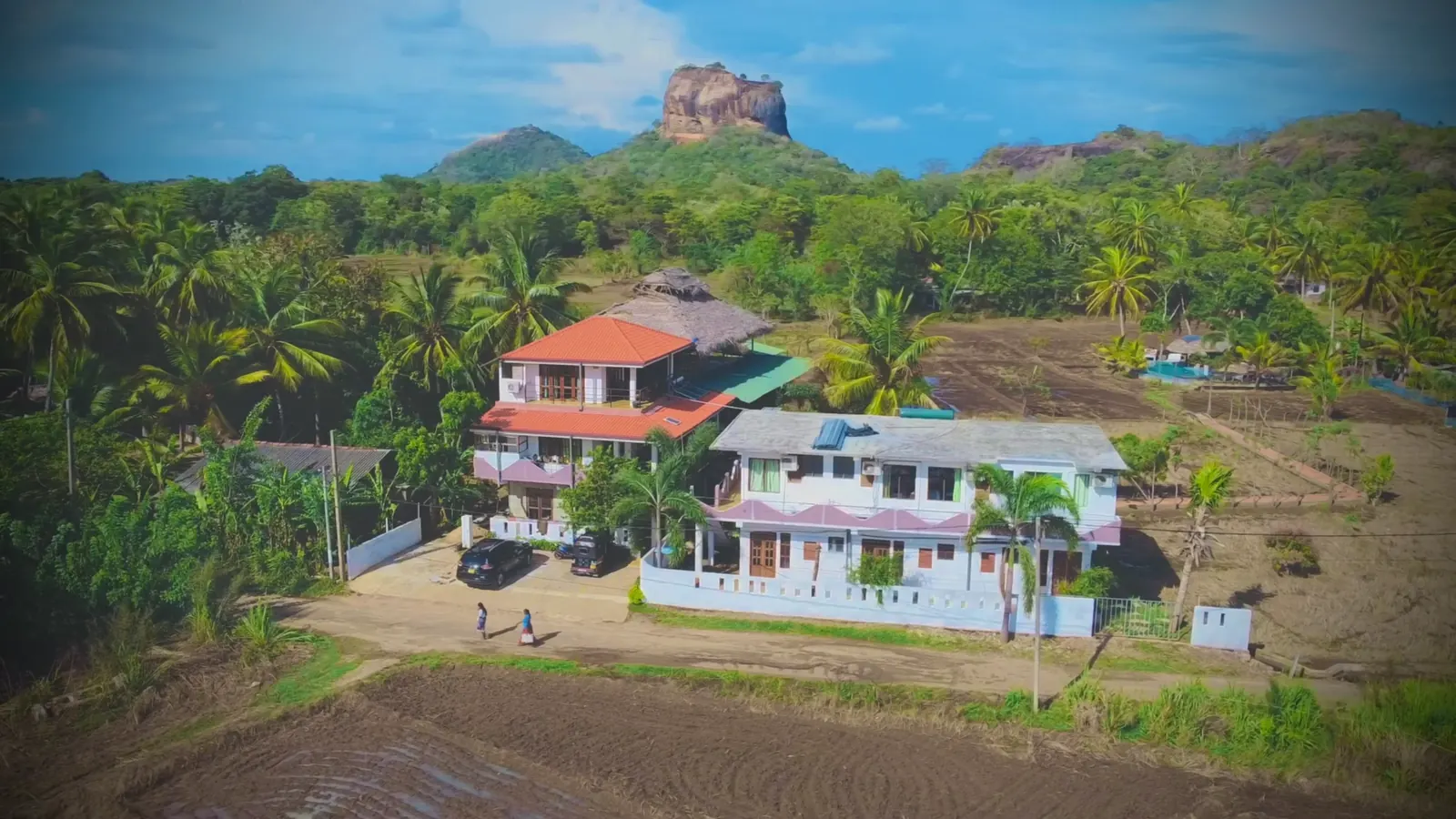
Both rocks are a short ride from the villa: Sigiriya is about 1.3 km and Pidurangala about 2.3 km in a straight line. A tuk-tuk is the easiest way to get there and back, and our front desk can arrange one at any hour. We’re always happy to suggest the best time to set off on the day, based on the weather and how busy the site is.
Last checked: October 2026. Seasons, prices and timetables change, so check the details before you travel. Staying with us? Our front desk is always happy to help you plan.